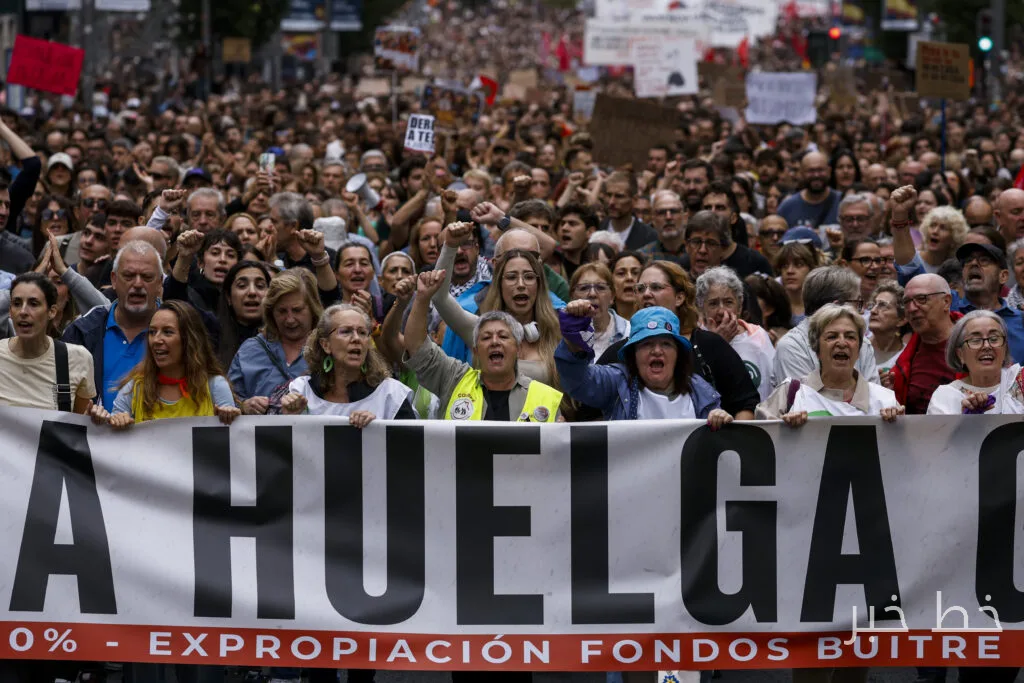
Protesters came out in over 50 cities in Spain on Saturday to draw attention to the housing crisis. The demonstrations took place as Pedro Sánchez, the Prime Minister of Spain, is considering the possibility of early elections.
Widespread protests in Madrid
The largest demonstration took place in Madrid, where four columns of protesters filled the main streets of the capital and converged at Cibeles Square. The Spanish Tenants' Union, which organized the protests, announced that 500,000 people took to the streets, while the government representation in Madrid estimated the number of protesters at 70,000.
Read more: Trump responded to South Korea's ambiguities in the $54 billion investment in Alaska
Reasons for the protests
Valeria Raco, spokesperson for the Spanish Tenants' Union, stated that the number of protesters reflects public frustration with political leaders who have failed to address the housing crisis. The average rent in Spain has increased by nearly 90 percent over the past decade.
The protests began after an investment company evicted 87-year-old Mari-Carmen Abascal from the apartment she had lived in since 1956. Sánchez's government introduced two late bills on Tuesday to control public discontent, aimed at limiting speculative practices and increasing support for vulnerable tenants. However, conservative representatives in parliament rejected both bills on Friday.
Political pressures and the future of elections
In the midst of this setback, senior government officials indicated that Sánchez is likely considering early elections to capitalize on public discontent regarding the housing crisis. While protesters expressed their dissatisfaction with the conservative opposition's negative votes on the bills, they also accused Sánchez of failing to take effective action against the housing crisis since coming to power in 2018.
Valeria Raco said, "Eight days of people's power have achieved more than eight years of an advanced government." She added that protesters will continue to pressure politicians.
Sánchez is also in the spotlight as he weighs his options. Emiliano García-Page, the Socialist leader of Castilla-La Mancha, and party leaders in Extremadura, the Basque Country, and Castilla y León have called for early elections.
Meanwhile, the prospect of imminent elections has pushed Spain's left-wing factions to attempt to reorganize. With Yolanda Díaz, the Deputy Prime Minister, unwilling to run again, Health Minister Monica García and Culture Minister Ernest Urtasun are seen as leading candidates for the leadership of the Sumar party.
The People's Party, a center-right party, is leading with 34 percent support in polls and is ready to form a government with the far-right Vox party, which has 18 percent support. Sánchez's Socialist Party has the support of 26 percent of voters and needs to unite with the left to form a new coalition.
The housing protests in Spain have also spread to other countries, with similar demonstrations held in Lisbon, Dublin, Potsdam, and The Hague. These movements represent a widespread crisis stemming from a shortage of affordable housing and pressure on governments to increase housing supply.
Read more: Senators introduced a new bill to reform building permits · EU interior ministers examined new methods of immigration control