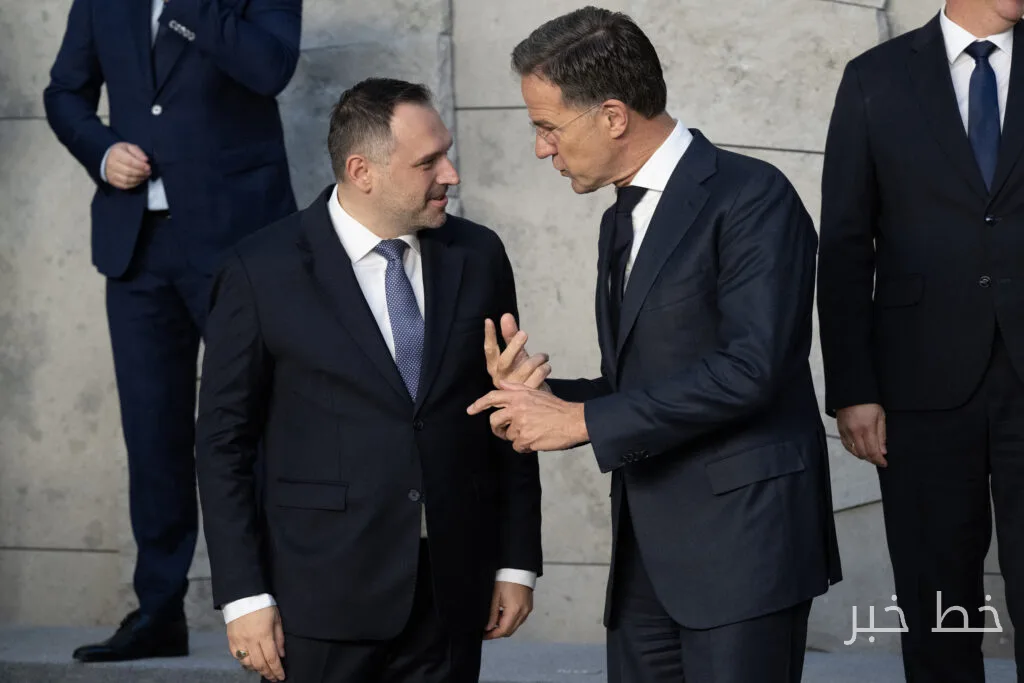
The Defense Ministers of Montenegro and Albania have requested NATO to send experts to help combat the increasing Russian disinformation in their countries. This request comes in the wake of rising hybrid attacks from Moscow across Europe.
Increasing Threats of Disinformation
In separate interviews, Dragan Škrbović, the Defense Minister of Montenegro, and his Albanian counterpart, Armald Nushi, stated that NATO needs to increase its support as both countries are facing social media campaigns that they claim aim to destabilize the Balkan nations.
Read more: UK and Germany's defense cooperation programs face challenges
Škrbović stated, "Russia is continuously conducting information campaigns targeting the vulnerabilities of Montenegro and other countries in the Western Balkans." This highlights serious concerns about the negative impacts of disinformation on the region's stability.
NATO's Response and Challenges Ahead
NATO agreed in 2018 to form hybrid response teams. Antonio Missiroli, former Deputy Secretary General of NATO, explained that these teams typically consist of about twelve experts sent by member countries. Their task is to coordinate responses, monitor threats, and send political support messages.
Škrbović also pointed out that the existing capacities in Montenegro for modernizing equipment and human and administrative capabilities have not yet reached the desired level. Nushi emphasized that NATO needs to be more active and establish protocols to counter malicious online actors.
This issue has become a hot political topic in Albania, where Edi Rama, the Prime Minister, has accused Russia and Iran of inciting anti-corruption protests that have been ongoing since May in the country. Nushi referred to the increase in social media campaigns over the past year, stating that these campaigns fuel "hatred and anger."
Both countries have also warned about disinformation threats from Russia and Iran, stressing that NATO needs to pay more attention to this issue. Meanwhile, communication experts, such as Bleriana Bino, believe there is no evidence to support Rama's claims, and this government action may be aimed at discrediting public discontent.
In Montenegro, Russia is trying to gain support for pro-Serb and pro-Russian opposition parties through information campaigns. Klavomir Filipović, a political scientist and expert on foreign influences, noted that Moscow is also seeking to exert influence through the local Serbian Orthodox Church.
Škrbović also mentioned the 2027 elections in Montenegro, stating that these elections will bring more challenges. He called for higher-level NATO officials to visit the country, saying this would demonstrate Montenegro's importance to the alliance.
Public support for NATO in these two countries is significantly different. According to a recent poll, 95% of Albanians support remaining in the alliance, while this figure is only 52% in Montenegro, the lowest among NATO member countries.
NATO previously sent hybrid response teams to Montenegro in 2019 and to Lithuania in 2021. Additionally, in 2022, after a cyber attack from Iran that disrupted government digital services, a team was sent to Albania.
Ultimately, the request from the Defense Ministers of Montenegro and Albania reflects deep concerns in Europe about Russian sabotage and hybrid warfare, which NATO officials view as a threat to the alliance's unity and support for Ukraine.
Read more: Angela Merkel calls for the election of Germany's first female president · Zelensky conditioned the halt of attacks on Russian refineries on receiving Patriot missiles