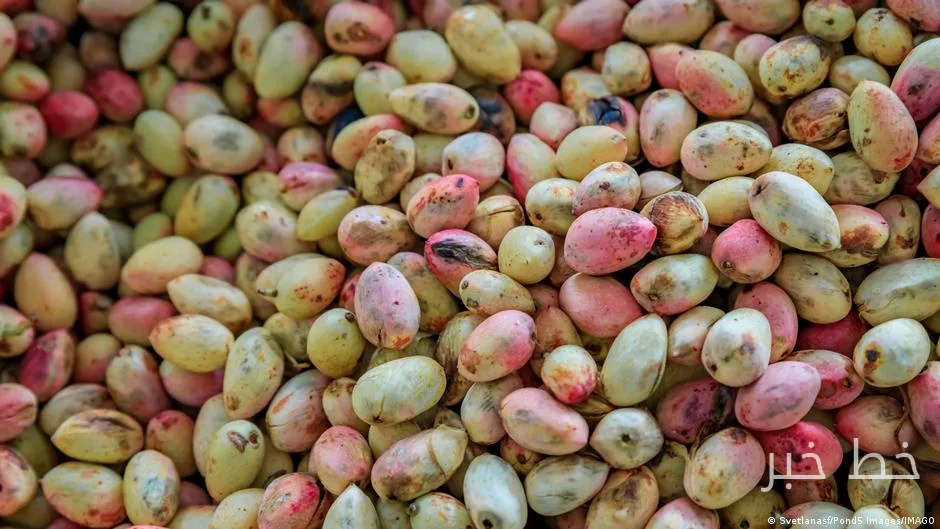
Armin, a pistachio farmer in the arid region of Rafsanjan, looks to his future with concern over the deep cracks in the ground that damage irrigation pipes. He says, "The ground has opened its mouth and water is pouring into it." These cracks have rapidly expanded over the past five years, and Armin fears that his children will not be able to continue farming like he and his father did.
Common Challenges in Iran and California
Farmers in Rafsanjan traditionally grow pistachio trees, but drought and groundwater extraction for irrigation have made this region one of the fastest subsiding areas in Iran. Research has shown that some areas of land are sinking by up to 37 centimeters annually. This situation has negatively impacted pistachio production.
In California, pistachio farmers are also facing similar problems. Joe Cavallo, a pistachio farmer in Fresno, says that while his farm is not directly affected by these issues, farmers are acutely aware of the risks. He points out that some areas in the San Joaquin Valley are facing serious water problems.
History of the Pistachio Industry in America
The connection between pistachio farmers in Iran and America dates back to the 1960s when American farmers created an industry using a type of Iranian pistachio. This type of pistachio, which is now grown in most orchards in California, is named Kerman, after a city near Armin's farm.
California has recently surpassed Iran as the largest producer of pistachios in the world, with most of this crop grown in California's Central Valley. Despite being one of the most fertile agricultural regions in the world, some areas still experience land subsidence of up to 20 centimeters annually.
Solutions and Challenges
In California, the Sustainable Groundwater Management Act (SGMA), passed in 2014, has created a requirement for balancing pumping and replenishment in aquifers by 2040. One method of aquifer management is to recharge aquifers during rainy years, allowing farmers to store water for dry years.
However, Ali Beitoli, a subsidence researcher at the Iran Road, Housing and Urban Development Research Center, says that awareness about groundwater management and subsidence in Iran has increased compared to the past, but it is still limited. He cites Tokyo's experience, where limiting water pumping has significantly reduced the rate of subsidence, and believes that if the government acts quickly, the problems can be managed.
In Rafsanjan, most orchards are still irrigated using surface irrigation methods, which means a significant amount of water is wasted due to evaporation. Armin says he is trying to learn from American farmers, but many older farmers are sticking to their traditional methods.
Given the climatic challenges and declining groundwater, the future of pistachio farming in both countries is at risk and requires immediate and effective action.