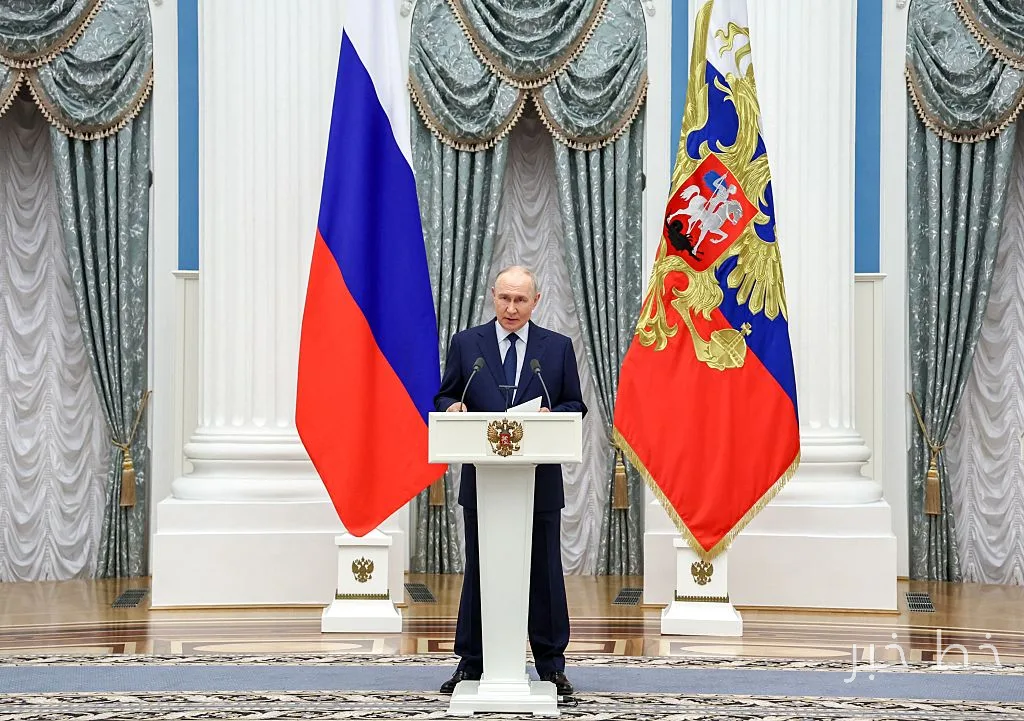
The parliamentary elections in Russia, held to determine the composition of the State Duma, began yesterday and will continue for three days. This election, which is the first parliamentary voting in the country since the invasion of Ukraine in 2022, is expected to see the United Russia party maintain its dominance with strong support.
The Power of the United Russia Party
The United Russia party currently holds 310 of the 450 seats in the State Duma, giving it extraordinary power to make key decisions without the need for cooperation from other parties. To maintain this power, the party needs at least 300 seats. Four other political parties are also expected to have representation in the State Duma after the elections; these parties include the Communist Party of the Russian Federation, the Liberal Democratic Party of Russia, A Just Russia, and the New People party, all of which generally vote for United Russia and support the war in Ukraine.
Read more: $184 Million Damage to U.S. Diplomatic Facilities in Four Gulf Countries
Criticism of the Election Process
Democracy watchdogs and foreign governments have condemned the Russian elections for their lack of freedom and fairness. Russian officials have previously denied these claims, stating that the voting process in the country is conducted according to law. However, experts believe that the Russian government uses various methods to influence election outcomes, which almost predetermines the results and ensures that Vladimir Putin and the United Russia party maintain control.
According to David Szakonyi, a Russia expert and election fraud specialist, these elections are being held in "the most repressive political environment in post-Soviet history." He states that the Kremlin uses various tools to influence elections at the state level, at polling stations, and in the daily lives of citizens.
Szakonyi notes that "undoubtedly, the most powerful tool" in the Kremlin's hands is restricting the candidates available for voting. In the current parliamentary elections, the only anti-war party registered by the Central Election Commission, Yabloko, has been barred from participating due to a ruling by the Russian Supreme Court.
The Kremlin also prevents opposition figures who oppose the war from entering government jobs by labeling them as "foreign agents." In other cases, opposition leaders like Alexei Navalny have faced legal prosecution and imprisonment. Others have left the country.
Vote Counting Fraud
Experts believe that the Russian government also directly influences the vote counting to achieve its desired results. According to Szakonyi, Russian election officials have historically intervened regularly to deliver votes to the ruling party and reduce votes for its competitors. He points out that this was previously done through "stuffing ballot boxes" and now also relates to altering online voting results.
Online voting is used in more than a third of Russia's regions, which, according to Szakonyi, gives the government more power as it eliminates paper ballot counting. He says, "The method of electronic vote counting is almost entirely a black box for the rest of society."
Regina Smith, a Russia expert and authoritarian regimes specialist, states that "fraud" or alteration of the counted votes occurs in local election commissions, which number over 90,000 across Russia and are mostly filled with loyalists.
At a deeper level, an "implicit threat" from the Russian government affects every election cycle. Szakonyi says, "Many Russian voters do not have the right to choose independently. They work for the government." He believes that many university students, healthcare workers, and teachers whose livelihoods depend on government organizations are part of a "vulnerable and captive voting bloc" that cares more about their votes out of fear of legal repercussions from the Kremlin.
This year, voting is also taking place in Russian-controlled areas in Ukraine: in Crimea, annexed by Russia in 2014, and in the regions of Luhansk, Donetsk, Kharkiv, and Zaporizhia. Smith states, "In the occupied territories of Ukraine, where elections are held illegally in these areas, armed soldiers go to homes and force people to vote."
Read more: Global Gender Gap Report Reveals Fragile Progress for Women · Slovak President Questions NATO's Mutual Defense Clause