In the recent midterm elections in the United States, there were only seven candidates from the major parties who had working-class jobs before entering politics. Although the final vote counts are still unclear, many of these candidates, who come from working-class backgrounds, have either won or are close to winning.
Challenges of Workers Entering Politics
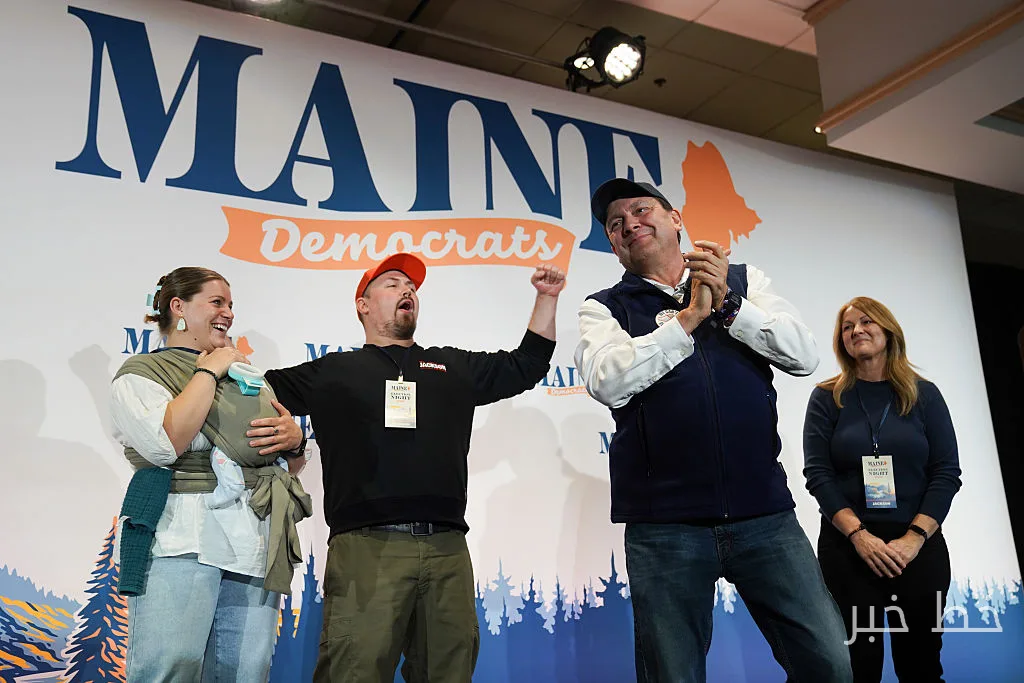
In national elections, candidates with working-class jobs are often discussed as rare exceptions. For example, the new senator from Maine, Troy Jackson, who was previously a logger, or New York representative Alexandria Ocasio-Cortez, who has worked as a waitress. However, these candidates are exceptions that reflect an unwritten rule in American politics: workers are generally not present in the political arena.
Read more: Wawira Njiru Introduced as the Winner of the Germany Africa Award
Research shows that individuals in working-class jobs—manual labor jobs like construction workers, service industry jobs like waitstaff, or office jobs like secretaries—rarely attain elected positions. Despite working-class jobs making up more than half of the workforce, the share of Congress representatives whose last job was in a working-class position has never reached 3%. This pattern is also observed in state and local politics: by 2024, on average, less than 2% of state assembly members have had working-class jobs.
Consequences of Political Inequality
This type of political inequality has real consequences. Research from various countries shows that when there are few candidates with working-class backgrounds, people have less trust in their governments. Studies conducted in the United States and elsewhere clearly demonstrate that the lack of working-class politicians skews economic policies in favor of the wealthy and ignores the needs of workers. As the old saying goes, in politics, if you’re not at the table, you’re on the menu.
But why don’t American workers pursue political responsibilities? It’s not because they run and lose or that voters don’t like them—it’s that they are rarely nominated in the first place.
In yesterday's midterm elections, according to our statistics, 933 candidates from the Republican and Democratic parties competed for Congress, but only seven candidates in the general election listed working-class jobs as their last non-elected position: Tim Rogers, a delivery driver (Wisconsin-4), Brian Poynter, a steelworker (Ohio-7), Sam Fortescue, a firefighter (Montana-1), Ray Poole, a machinist (Michigan-9), Christopher Richard, an electrician (Missouri-8), Rebecca Cook, a waitress (Wisconsin-3), and Troy Jackson, a logger (Maine Senate).
These seven candidates—so few that all their names could fit on a sticky note—have experience in jobs that most American workers engage in daily. Studies show that when working-class candidates compete, they generally perform as well as other candidates, and the 2026 elections were no exception. The only working-class Senate candidate, Troy Jackson, managed to defeat Republican Senator Susan Collins.
Current results indicate that working-class Democratic candidates in the House performed, on average, 9.3 points better than other Democrats in their districts. However, Republican candidate Tim Rogers performed 5 points worse than in the 2024 elections.
In summary, where workers were nominated, they garnered votes and changed seats at reasonable rates. But why aren’t more workers running for office?
Over the past 15 years, we have tried to understand the reasons for this complex issue in the United States and other democracies. We have pursued misleading explanations, such as the assumption that working-class individuals are less qualified or less interested in running—which there is no evidence for. There are also explanations that do not help us, such as the notion that conditions were better during labor unity, and elections were less costly (which has not been the case).
What we have learned is that workers are rarely present in government positions because they are rarely nominated. And they are rarely nominated due to the personal burdens they must bear.
Read more: Rising Prices Affect American Voting Decisions · Donald Trump Blames War with Iran for Midterm Election Loss