The Black Sea, as one of the active fronts of the Ukraine war, has faced serious incidents in recent days, while receiving less attention compared to the Baltic Sea. Two cargo ships, Alpha Watan and Abel, were attacked by drones on October 6 in Bulgaria's exclusive economic zone.
Attacks on ships and Bulgaria's response
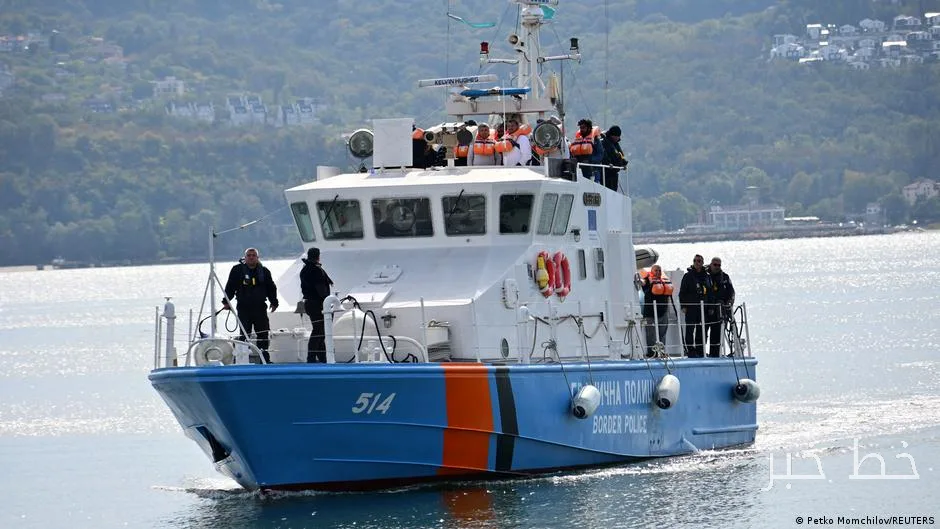
The Alpha Watan sank, and its crew has not yet been rescued. The search and rescue operation conducted by Bulgaria was halted on Wednesday. The crew of the damaged ship Abel was rescued by a Bulgarian vessel, and two were taken to a military hospital in Varna. A day before this incident, another ship named Royad Mamedov was attacked off the coast of Romania, resulting in the deaths of two of its crew members.
Read more: The hope of lawyer Junaid Hafeez for the release of this Pakistani researcher
These incidents are the latest examples of multiple attacks on cargo ships carrying grain from Ukraine. As a result, concerns about the security of the Black Sea, particularly its western part, which includes the coasts of Bulgaria and Romania, have significantly increased.
Officials' comments and security analyses
Ruslan Tard, a global security expert, states that the Black Sea front is clearly expanding and should no longer be viewed solely as a potential escalation route for tensions in the Baltic Sea. Meanwhile, Bulgaria's Prime Minister, Rumen Radev, downplayed the attacks on ships, stating that ships are continuously sinking in the Black Sea.
The Bulgarian government described the attack as a "completely unacceptable" violation of international law but refrained from condemning Russia for the war in Ukraine. Volodymyr Zelensky, the President of Ukraine, clearly stated that Ukrainian forces had no role in this attack and pointed the finger at Russia.
After a National Security Council meeting on Wednesday, a statement was issued that did not specify the source of the threat in the Black Sea again. Radev noted that the cargo and direction of the ships' travel "logically" provide reasons for a hypothesis of Russian involvement but emphasized the lack of conclusive evidence.
Filipova, head of the Global Analysis Institute, believes that this situation reflects Bulgaria's weakness as a weak link in Europe's defense against Russia and China's malign influence. She stated that "this weakness stems from the lack of serious institutional response to hybrid attacks and the absence of appropriate measures." According to her, the Bulgarian government is trying to project an image of peace without specifying the conditions and consequences for the security of Ukraine and Europe.
Nevertheless, some of the rescued crew members from the Abel believe that this attack was the work of Russia, as the ship was carrying Ukrainian grain. Tard mentioned that the testimony of these crew members is a hypothesis of evidence rather than conclusive proof, but the logic of motivations points towards Russia.
He also referred to the lack of experience of Bulgarian institutions in attributing maritime drone attacks in Bulgaria's exclusive economic zone and stated that until more specific data is available, the best phrase to describe the situation is "likely but unproven Russian responsibility."
Analysts believe that these incidents will increase pressure for greater maritime surveillance and coordination between coast guard services and information sharing among allies. Overall, this situation could lead to changes in maritime transport regimes and increased insurance costs and difficulties in crew hiring.
Read more: Qatar's efforts for an agreement between Iran and the USA in the Strait of Hormuz · Russian airstrikes on Ukraine on Putin's birthday killed 12 people