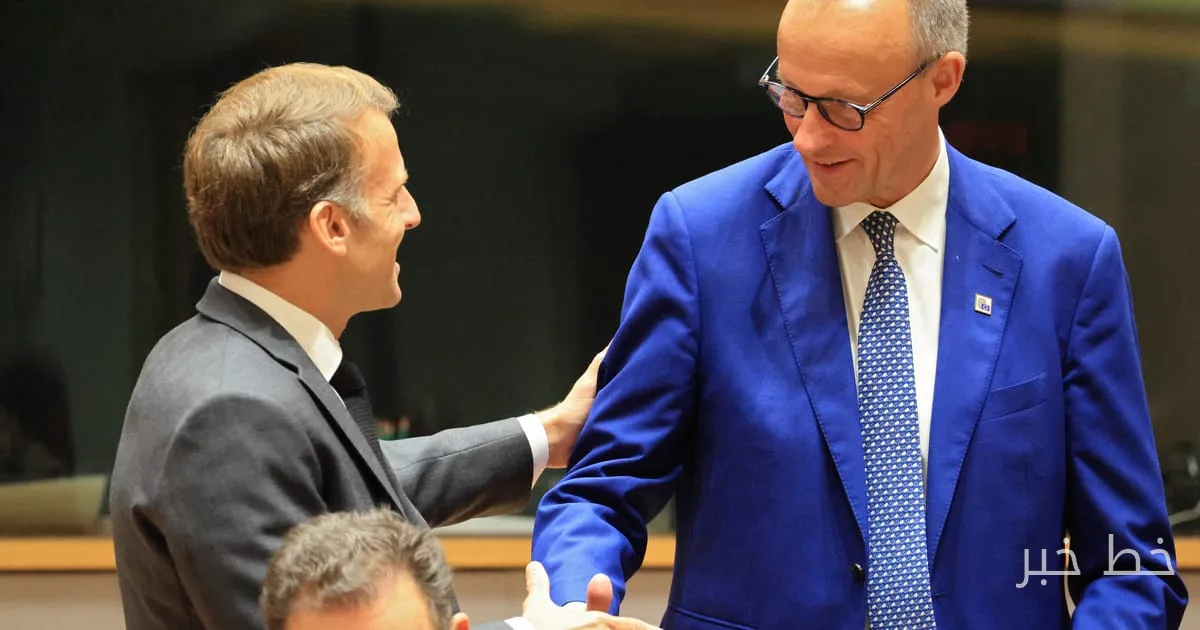
Friedrich Merz, the Chancellor of Germany, and Emmanuel Macron, the President of France, announced in a joint statement that they have agreed on a common approach to legal changes regarding internal combustion vehicles and to strengthen "made in Europe" productions. This agreement aims to reduce greenhouse gas emissions and enhance Europe's capabilities to develop and produce the next generation of electric vehicles.
Details of the Agreement
In this joint statement, the two governments emphasized their continued efforts to significantly reduce CO2 emissions and stated that they wish to reach an agreement soon with their European partners. This package includes a European decarbonization pathway with the necessary flexibilities to adapt to market conditions and the need for technological innovations.
Read more: Change in the Status of the Kansas Senate Competition to Uncertain
Despite this agreement, Carsten Schneider, the German Minister of the Environment, initially called for more conditions for green steel production by sending a letter to Chancellor Merz. Schneider stated in this letter that incentives should be provided for producing vehicles that use green steel. Ultimately, after negotiations held on Friday, he backtracked from his position and announced that the supply of green and recycled steel could also be done nationally.
Impacts on the Automotive Industry
Under this agreement, Germany has responded positively to France's demands by accepting stricter "made in Europe" standards for the automotive industry under the "industrial acceleration" law. In return, the ban on internal combustion vehicles will also be reduced. Lars Klingbeil, the Vice Chancellor and Minister of Finance of Germany, stated: "We do not want only parts from Asia to be assembled in Germany, but we want key components to be developed and produced here." He also promised that the automotive industry must meet its needs through domestic production in the future.
Currently, the European Union's goal is for companies to achieve zero emissions related to internal combustion engines by 2035 compared to 2021. However, under the new agreement, Germany and France are seeking to reduce this target to 90 percent and, in return, will provide an additional 10 percent space for investment in alternative fuels.
Read more: The President of Cyprus Suggested Reducing the EU Budget to 3 or 4 Years · France and Germany Failed to Agree on "Made in Europe" Regulations