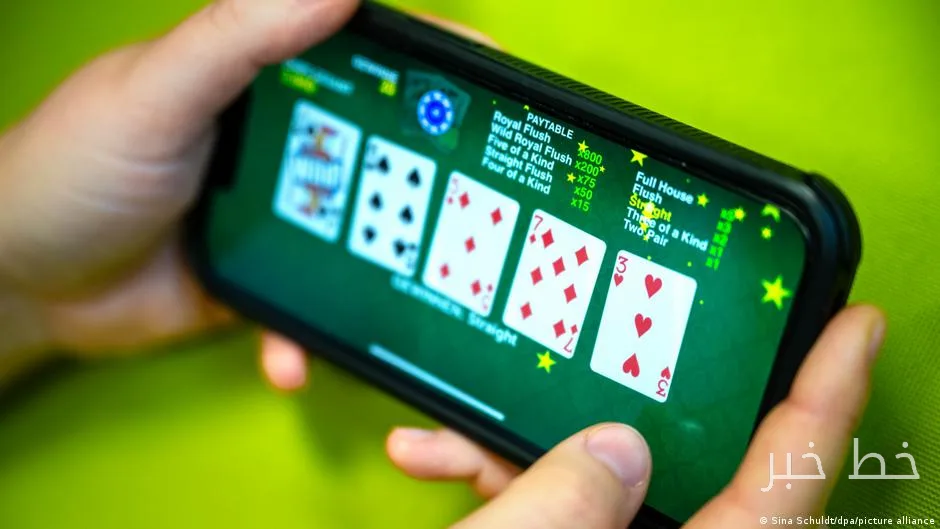
The German court, following the ruling of the European Court of Justice, confirmed the right of gamblers to sue gambling companies for damages caused by online gambling and fruit machines that were illegal in Germany. This ruling could have important consequences for addicted gamblers, as thousands may be able to civilly sue gambling companies.
Historic Ruling and Its Implications
A series of judicial decisions at local, federal, and European levels have been issued in favor of gamblers over the past year. This trend began with a ruling from the Stuttgart Regional Court in September 2025, which ruled in favor of a plaintiff from the state of Baden-Württemberg in a lawsuit against the online gambling company based in Malta, Tipico Games. The plaintiff lost about €10,000 ($11,200) between 2020 and 2022, but since online gambling was banned in Germany until 2021, the court concluded that operators must refund the funds due to the lack of legal basis.
Read more: Review of Drug Pricing Agreement Costs Between the UK and the US
Tipico then appealed to the Federal Court of Justice (BGH), which is Germany's highest civil and criminal court. In an initial oral hearing in mid-September this year, the court followed a key point from the plaintiff's case: that gamblers have the right to reclaim their losses if the companies did not have a license in Germany at the time the losses occurred. However, a final decision on this case is expected to be made in January next year.
Legal Challenges and Support for Gamblers
Online gambling and fruit machines were banned in Germany from 2008 to 2021, but several gambling operators were active in the country due to having gaming licenses in other EU countries. In April this year, the European Court of Justice ruled that EU laws do not prevent a member state from "prohibiting certain services" or "adding civil legal consequences to that prohibition." In other words, even if a gambling company has a valid license in one member state, this does not violate national gambling laws in another country.
Thomas Dunckheim, a business lawyer at the global law firm Greenberg Traurig, which specializes in gambling law, said that law firms are gathering clients — sometimes with the help of online AI tools — to prepare large-scale class action lawsuits. Dunckheim himself has witnessed individuals who have lost tens of thousands of euros and are seeking legal representation.
Given the risks of online gambling for individuals facing addiction, these rulings could be seen as a form of assistance for gamblers. Tobias Heyer, a psychologist at the Institute for Public Health and Nursing Research at the University of Bremen, pointed to four main features of online gambling: anonymity and lack of social control, 24/7 accessibility, ease of cashless transactions, and the abundance of games.
Dunckheim also warned that gamblers may face challenges in presenting their claims. He emphasized that if a gambler's contract with a company is illegal in the gambler's country of residence, the player can reclaim their losses, but only if the player themselves has not engaged in "illegal activity." This could be a complex issue and lead to ambiguous legal responses.
The Tipico case is particularly interesting in the context of Germany, as although the company is based in Malta, it was founded in 2004 by a group of German lawyers. The company, which has several thousand employees worldwide, has also supported several top German football clubs. Tipico has also stated that it has strict measures in place to protect consumers from identifying and preventing risky gambling behavior.
Read more: Increase in Inflation Rate in September and Trump's Campaign Trips to Arizona and Montana · Arrest of Two Turkish Citizens in Germany for Fire at Starlink Station in Poland