Germany and France announced an agreement to support the European automotive industry on Friday. This plan focuses on reducing carbon emissions and developing and manufacturing electric vehicles in Europe.
Transforming the Automotive Industry
In a statement released by the countries, their common goal is outlined: "To succeed in transforming our automotive industry and meeting climate goals, we must ensure that the cars of the future are produced in Europe." This agreement also includes incentives for investment, research, and production.
Read more: Donald Trump called Ukraine's attacks on Russian energy facilities disgraceful
Officials' Satisfaction
Friedrich Merz, the Chancellor of Germany, described the agreement as "a good day for car drivers and businesses in Germany, France, and Europe." He wrote on his X social media account: "This is an investment signal for the industry."
Emmanuel Macron, the President of France, also stated that this agreement represents "a clear goal for success in transforming" the European automotive industry and meeting climate goals. He added: "We hope this dynamic between France and Germany can quickly lead to an agreement with our partners, for our jobs and industry."
According to a Handelsblatt report, the two leaders also agreed in principle that automakers must reduce emissions from new cars by 90% by 2035, without needing to offset the remaining 10%. This agreement requires support from other EU countries and the European Parliament to become law.
The European automotive industry is facing challenges and is trying to compete with Chinese rivals in the electric vehicle market, which has forced it to cut costs. Olaf Lies, the Prime Minister of Lower Saxony, praised the agreement as "a strong signal" in support of the European automotive industry that protects jobs in this sector.
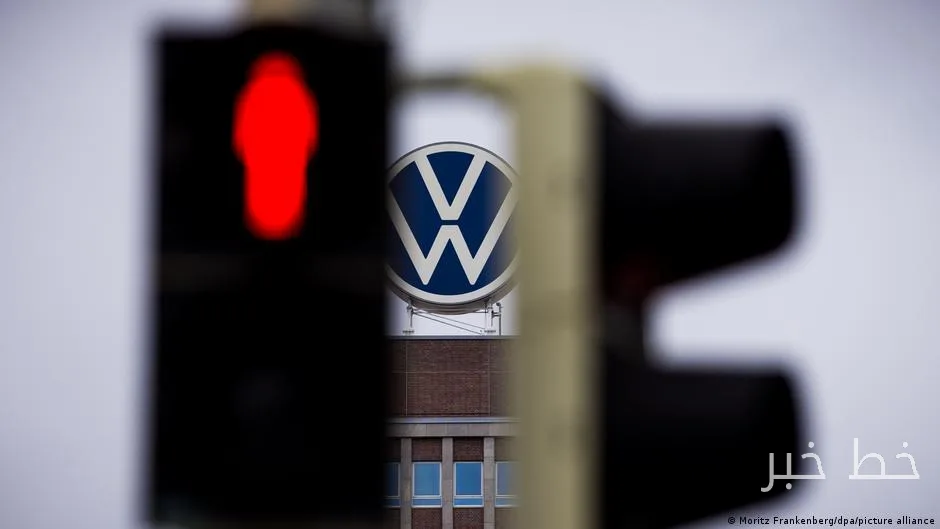
The German automotive industry is facing a deep structural crisis due to intense pressure from Chinese competitors, the transition to electric vehicles, high production costs, and other challenges. The Volkswagen automotive group, as the largest car manufacturer in Europe, has suffered the most from excess capacity in its German factories, high fixed costs, and dependence on China.
Read more: The International Monetary Fund considers war and disruptions a threat to the Middle Eastern economy · The German Parliament approved a program for child allowances