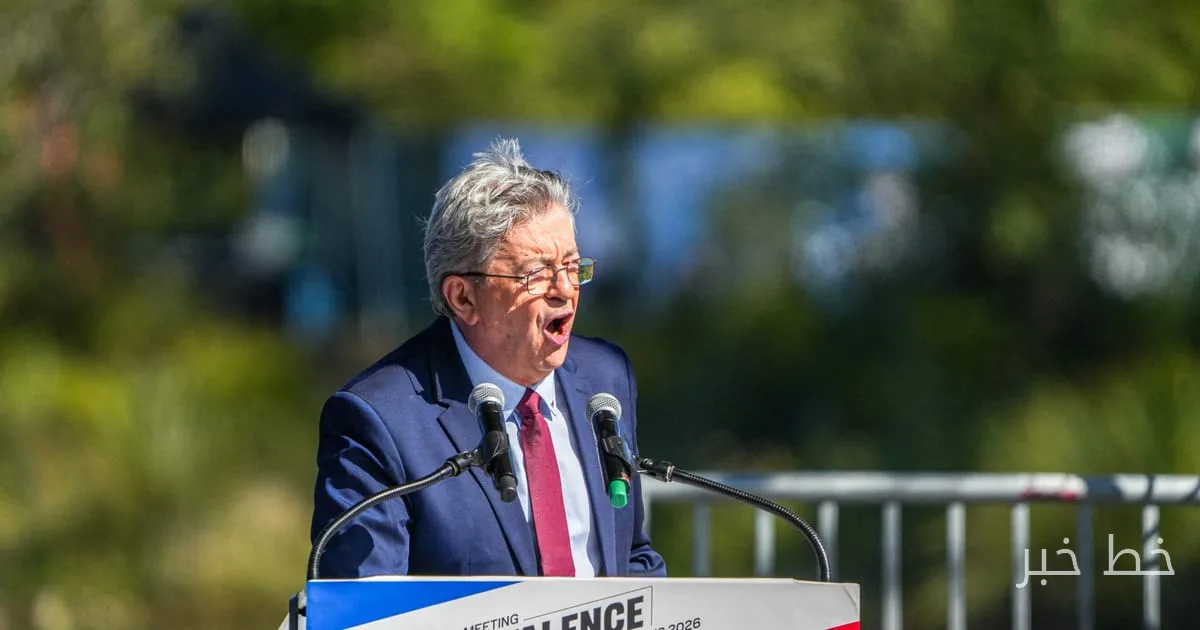
Jean-Luc Mélenchon, the presidential candidate of France, recently announced that he wants to "burn" the country's debt. These controversial statements have led to widespread reactions from political opponents and central bankers, and his economic advisors are trying to soften his language.
Analysis of Mélenchon's Statements
Eric Ber, an economist affiliated with the La Boiit Institute, said in an interview: "Mélenchon's statements have sparked reactions and discussions that were somewhat successful." Ber and other leftist economists are trying to shape the discussion around the dominance of financial markets over public debt.
Read more: The ban on diesel exports will not significantly affect price reductions
Mélenchon, who polls suggest may reach the second round of the presidential election for the first time against Marine Le Pen, the far-right leader, seems to want to manage France's financial discussion in his own way.
Mélenchon's Proposals and Reactions
In a press conference held last June with online media and influencers, Mélenchon proposed his idea of "freezing public debt held by the Bank of France at zero interest rates." This plan is reminiscent of a proposal from his previous presidential campaign to convert this debt into permanent, interest-free debt.
The Bank of France holds less than one-sixth of France's total debt, amounting to 488 billion euros. Mélenchon has suggested keeping this debt "on ice," but his recent statements about "burning" the debts have become controversial.
The President of the European Central Bank and other financial officials have warned that such an action is "illegal" and could lead to a financial crisis. In a survey article published in August, Ber and other economists attempted to reduce the controversy by emphasizing the idea of "freezing" instead of "burning."
The article stated: "Mélenchon's idea of 'putting securities on ice' means removing part of France's public debt from the market to protect it from speculative attacks." However, Mélenchon continues to use the terms "freezing" and "cancellation" interchangeably.
Criticism of Mélenchon mainly revolves around the notion that his plan may be illegal and requires amendments to European treaties, a process that is time-consuming and requires comprehensive approval. Additionally, the debt of the Bank of France is decreasing, which could pose a threat to Mélenchon's proposals.
Read more: Friedrich Merz faces serious political challenges · The Chairman of the National Republican Committee predicted that the GOP will dominate congressional seats