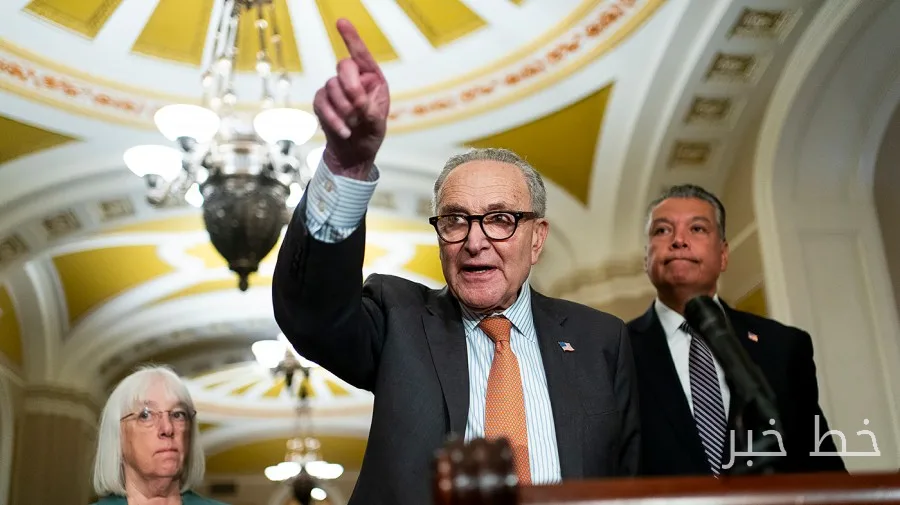
Democrats and Republicans in Congress have engaged in discussions to permanently eliminate the debt ceiling of the United States. This collaboration may lead to a historic agreement that ends future financial crises and strengthens the country's economic security.
Background of the Debt Ceiling
The debt ceiling refers to a limit set on the amount of government debt. This concept has existed in the U.S. since 1917 and serves as a tool for controlling government spending. However, in recent years, the frequent raising of the debt ceiling has become a contentious issue, leading to financial crises and economic instability.
Read more: Dordash Agrees to Pay $131.5 Million to New York to Resolve Worker Underpayment Claims
Existing Challenges
One of the main challenges in eliminating the debt ceiling is concerns about its effects on the budget deficit and the increase in public debt. Critics believe that removing this ceiling could lead to increased spending and financial instability. In contrast, supporters of the plan argue that eliminating the debt ceiling allows the government to invest in infrastructure and social programs without worrying about financial constraints.
In this context, Democrats and Republicans are seeking to create a bipartisan agreement that enables them to work together on financial issues. This collaboration has gained particular importance given the current circumstances where the U.S. economy is affected by various factors.
Economic Implications
Eliminating the debt ceiling could have profound effects on the U.S. economy. This action could help increase investor confidence and reduce market volatility. Additionally, this agreement could allow the government to respond more effectively to social and economic needs.
However, if not managed properly, this action could lead to increased public debt and budget deficits. Therefore, Democrats and Republicans must approach this issue with caution and care, providing solutions to control spending and maintain the country's financial stability.
Read more: The European Union is Approaching Trade Agreements with Six Southeast Asian Countries · Trump Announced the Possibility of Banning Diesel Exports to Reduce Prices