Children born in Europe are now facing serious challenges due to climate change. A new study shows that these children will experience nearly twice as many severe fire days compared to their grandparents. This 84% increase in severe fire days will have profound impacts on the future lives of this generation.
Consequences of Climate Change
According to this research, a child born in Europe in 2025 will be exposed to more than three additional years of severe fire days compared to someone born in 1950. The largest increases are predicted in Mediterranean regions, where individuals born in 2025 will be exposed to severe fires up to 2.5 times more than those born in 1950. This means more than five additional years of exposure to fire conditions throughout their lives.
Read more: Indonesia Faces Worst Fires in 11 Years
Increase in Fire Days in European Countries
Portugal, which has had the highest ratio of burned area in recent years, expects that severe fire days will more than double under current climate policies. This country will increase from 14 days a year between 1950 and 1970 to 32 days a year by 2100. Each additional degree of global warming by the end of the century adds about 272 severe fire days to the life of a Portuguese child born in 2025.
Children born in Greece are also expected to experience an additional 473 days of severe fire exposure, while this figure reaches 448 days for children in Spain and Italy. This increase in fire days not only adds to the dangers posed by fires but also to health problems caused by fire smoke.
Smoke from fires can have immediate health effects, including eye irritation, shortness of breath, and coughing. Over time, long-term exposure can lead to the onset and exacerbation of respiratory and heart diseases, as well as cognitive problems and memory loss. Additionally, exposure to fire smoke is associated with an increased risk of mortality.
Research shows that swift action to reduce greenhouse gas emissions can help mitigate these risks in all regions. If we limit global warming to 1.5 degrees Celsius, many of these risks can be avoided. While younger people will be more at risk across all pathways, every fraction of a degree of warming matters and can reduce the dangers that young people will face throughout their lives.
However, the world is far from this goal. A report from the United Nations in early September shows that the Earth is approaching the threshold of 1.5 degrees Celsius of global warming set in the Paris Agreement. Optimistic scenarios predict that the temperature will rise to 1.8 degrees Celsius, while other estimates indicate higher increases.
Europe, as the continent experiencing the fastest temperature rise, has seen temperatures increase by approximately 0.56 degrees Celsius per decade since the mid-1990s, more than twice the global average.
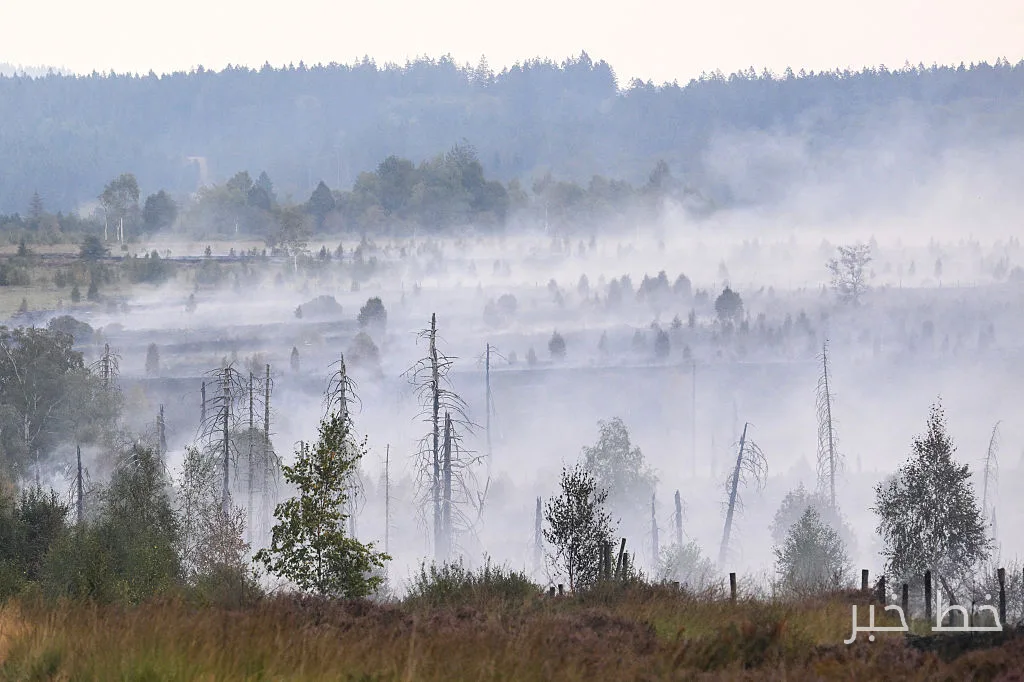
This summer, several severe heat waves hit the European continent, with the European Forest Fire Information System reporting that over 668,000 hectares (over 1.6 million acres) burned across the European Union. This includes the worst fire in Belgium in a century and the largest recorded fires in France and Spain since data collection began. European Commission President Ursula von der Leyen recently proposed a new plan to tackle heat and establish a new European firefighting fleet, calling this summer the "summer of truth."
This situation reflects not only the predictions of climate models but also the real-world realities and dangers that humanity faces.
Read more: Oil Spills from Tankers in the Strait of Hormuz Harm the Persian Gulf · Trump Administration Unveils Medicaid Drug Pricing Plan