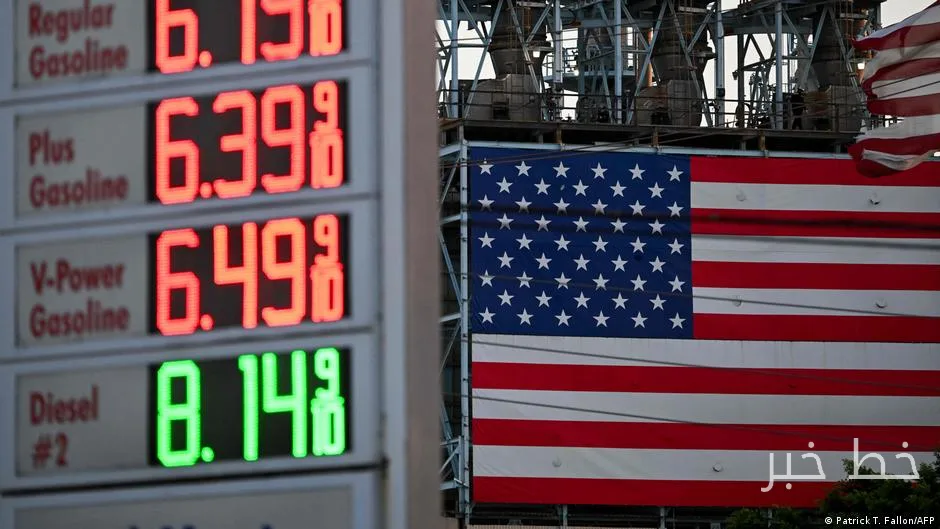
Kana Abdullah has worked as a driver in Syria's capital, Damascus, for 12 years, but he and many of his colleagues are now facing financial problems. After the recent increase in fuel prices in Syria, he stated: "By the end of the day, there is almost nothing left to live on." He also pointed out that despite being able to afford fuel, meeting basic needs such as food and car repairs has become difficult for him.
The Impact of Rising Fuel Prices on People's Daily Lives
Local people share similar concerns. Kamar Kasoum, a mother of three, said: "People are worried about how to get to work and back home, as just the cost of transportation eats up half of their salaries." In mid-September, the Syrian government raised the prices of all types of fuel, including gasoline and diesel. Diesel experienced the highest price increase at 40%, and the Ministry of Energy justified these changes due to high global costs and local shortages.
Read more: Lukashenko announced that Belarus does not have enough potash for Trump
Protests and Economic Inequality
This action sparked one of the largest protests in Syria. While fuel prices remain acceptable compared to other countries in the region, experts say that the purchasing power of the Syrian people has severely decreased. Protesters demanded the ousting of politicians they held responsible for the current situation by burning tires and blocking roads. The protests quickly subsided as the government made some adjustments and announced plans to subsidize diesel for heating, agriculture, and industry.
However, the rise in fuel prices is not the only factor putting inflationary pressures on ordinary people. The Syrian Research Center reported in its latest report that prices increased by nearly 25% between July 2025 and July 2026. More concerning is that the highest price increases, around 37%, are related to essential costs such as housing, water, electricity, and gas.
Ali Sadiyan, an architect in Damascus, pointed out that there is no logical correlation between individual income and the prices people are paying. He stated: "People feel that prices have gone up significantly." He also added that new economic projects are designed to benefit the wealthy classes and called for more transparency in government programs.
Criticism and Discontent with Economic Programs
Criticism of Syria's economic programs has increased. Some anti-government activists pointed to the luxury watches worn by some Syrian politicians and referred to a kind of "crony capitalism" and the diversion of budgets towards militarization. However, there is also criticism from more moderate sectors. A Syrian media outlet reported on billion-dollar housing projects in the country, which mostly consist of residential complexes and luxury apartments, raising the question, "Who can live in these projects?"
Observers believe that the neoliberal reforms that the Syrian government has committed to will only exacerbate this problem and may lead to similar social issues in the long term that sparked the Syrian revolution in 2011.
The new Syrian government was initially welcomed by the people, but polls show that public patience is running out. According to a survey, only 13% of respondents believe that the government is taking adequate measures to address skyrocketing energy and food prices.
Sam Heller, a New York-based analyst, noted that the new government is pursuing economic liberalization programs without regard for the vulnerability and deep poverty of most Syrians.
Read more: Political alliance between Europe and the Philippines regarding trade agreement · Crisis in the automotive industry in Germany and pressure on the 35-hour workweek