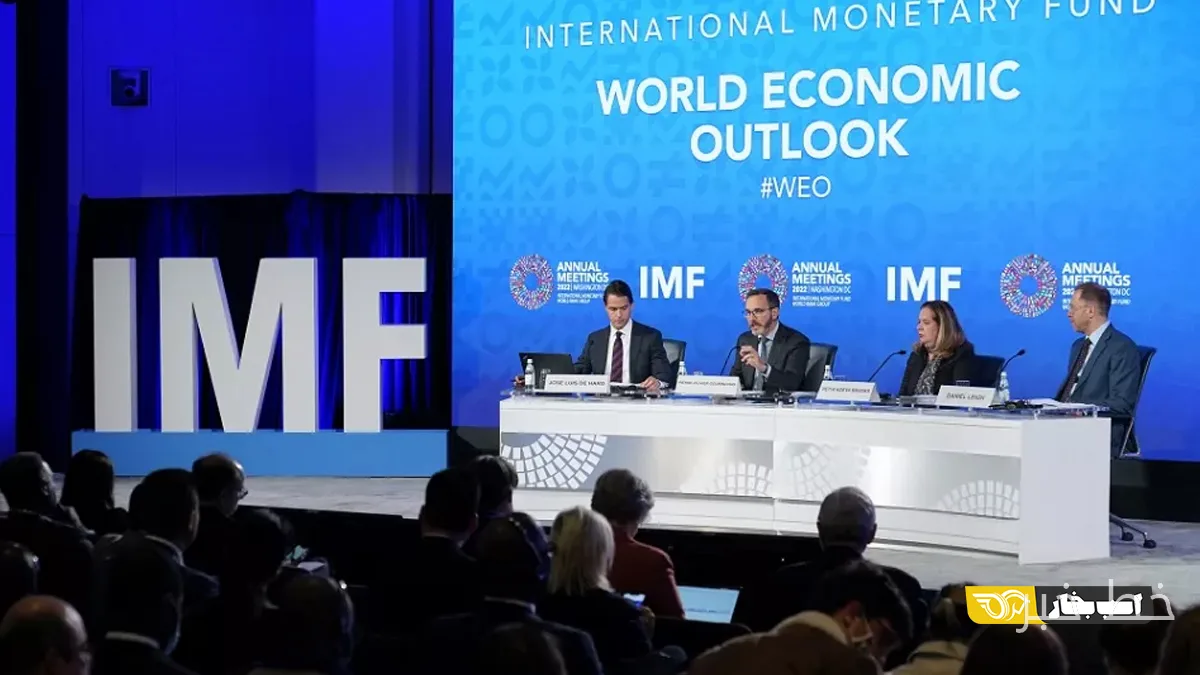
The latest global economic outlook from the IMF shows that economic growth, despite relative resilience, remains under pressure from war and the energy crisis; conditions that could impact Iran's automotive industry and market through production costs, supply chains, and household purchasing power.
Economic Growth Forecast and Industrial Challenges
The International Monetary Fund (IMF) has raised its global economic growth forecast for this year to 3.1% in its October 2026 report; a figure slightly above the 3% estimate from July. However, this limited improvement does not mean that economic risks have been alleviated. The IMF has warned about the consequences of the continuation of war, rising energy prices, and the limited capacity of governments to support consumers. In other words, the global economy has so far managed to absorb some shocks, but the continuation of the crisis could present this resilience with a more serious test.
Read more: The Republican Outlook in Congress Becomes Darker Due to Electoral Changes
Economic Pressures on Iran's Automotive Industry
This outlook, while not providing a direct forecast about production or the automotive market in Iran, offers a framework for examining the pressures facing the country's automotive industry; an industry whose production costs depend on currency status, access to parts and raw materials, transportation, and trade conditions. The increase and fluctuation in energy prices are not limited to fuel costs; transportation, sourcing of raw materials, and industrial chain activities are also affected. For Iranian automakers and parts manufacturers, these pressures, alongside trade restrictions and difficulties in accessing certain parts and technologies, become even more significant.
In such conditions, even if a producer can source part of their needs through alternative routes, this substitution is not necessarily without cost. Increased import costs, prolonged delivery times, or the need to change suppliers can disrupt production plans and raise the final cost of vehicles. Of course, the intensity of this effect depends on each company's reliance on imports, the state of exchange rates, and the possibility of sourcing parts domestically.
Improving trade conditions and access to parts can help increase supply, but it does not guarantee a decrease in prices on its own. The final outcome depends on exchange rates, financing costs, pricing policies, competition, and the extent to which cost reductions are passed on to consumers.
The main message of the IMF's outlook for Iran's automotive industry is not a direct prediction about the future of this industry, but the necessity to pay attention to the link between external shocks and internal economic weaknesses. To assess the outlook for the automotive industry, indicators such as production volume, continuity of parts supply, import costs, access to technology, and the real purchasing power of customers must be monitored simultaneously.
Read more: Germany's Economic Growth Forecast Increased to 1.3% · Thales Considered Trump's Agreement with Russia Detrimental to Graham's Efforts